

News
Feed efficiency key to dairy resilience this spring
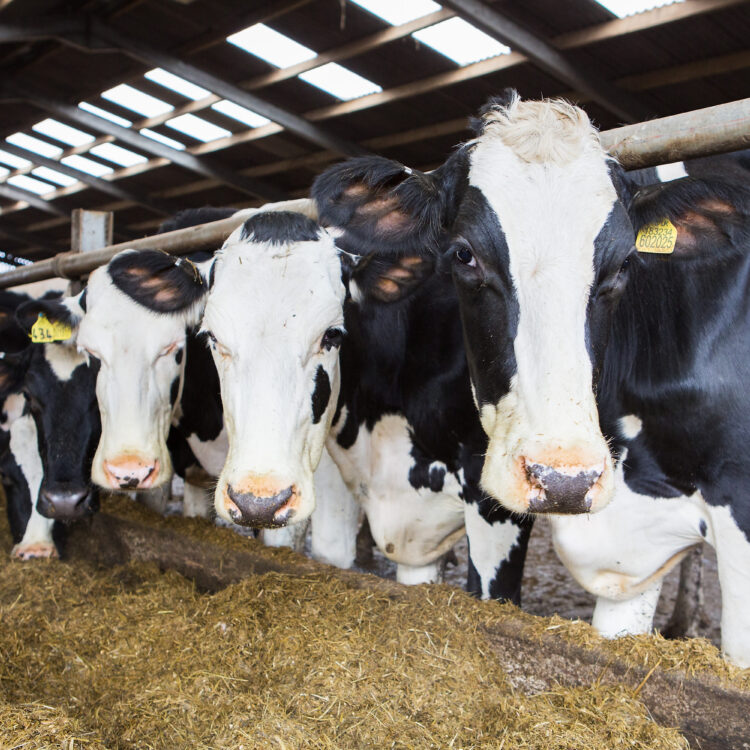
Concerns over falling milk prices, alongside rising input costs against the backdrop of the volatile political and conflict landscape in the Middle East, means a focus on feed efficiency will be key for dairy producers this spring and into summer.
Disruption to oil and natural gas supply routes, including shipping around the Strait of Hormuz, resulted in oil prices rising 10-13% immediately after the conflict escalation. With the diesel price so closely linked to oil market volatility, this has long-term implications for the agriculture sector, stretching beyond fuel costs alone.
Nitrogen fertiliser is also directly linked to natural gas prices, and with Iran and the Gulf region major urea and ammonia exporters, the early indicators are that fertiliser prices are already rising, and are likely to remain elevated. Fertiliser costs directly impact into the cost of feed.
Likewise, when shipping routes are disrupted or freight costs rise, grain and feed prices typically follow. A focus on feed efficiency, therefore, is key this spring, with volatile feed markets and milk price drops resulting in a concerning milk to feed price ratio (MFPR).
Understanding baselines
“Feed efficiency will be based on balancing rations appropriately and fundamentally this will mean understanding your baseline, and making the best use of what you bring in to support that,” explains Charlotte Ward, ruminant technical manager at KW Feeds.
For those cows out grazing, analysing fresh grass will be key, while with new forages coming in, regular forage analysis will also be essential to achieve true diet optimisation.
“Once you have the baseline, you can consider the best options to carefully balance rations and supplement specific energy and protein requirements, being aware of what you want to achieve to meet your contract requirements,” she adds.
Ms Ward advises making sure rations are balanced so that nutrients are not wasted. It is also important to make sure the cows have what they need to be supported beyond the nutrient values of the ration.
All of this will help to identify when to invest in feed or feed additives, and to inform better purchasing decisions, based on those needs, and the potential return on investment (ROI).
“In times of lower milk prices and higher feed prices, this is key,” she says.
Manufacturing contracts
For those on manufacturing contracts for example, with beneficial payments on butterfat, the inclusion of a methionine hydroxy analogue (HMBTa) in the diet can have a positive impact on milk constituent production, offering better value than protected fats.
“Supplementing with a HMBTa promotes milk fat, and is particularly effective in situations where milk fat might be compromised due to low rumen pH and/or where feeds with high levels of unsaturated fatty acids are being fed; for example distillers’ products, biscuit meals or even fresh grass or high quality grass silage,” continues Ms Ward.
“Typically, we see milk fat lifted by 0.3% when feeding HMBTa. This can also be particularly relevant for those herds moving into a summer grazing situation, with significant ration changes, high levels of rapidly fermentable carbohydrates and elevated levels of unsaturated oil,” she adds.
HMBTa’s mode of action is, in essence, an increase in fat production through the stimulation of rumen microflora to maintain the normal pathway of rumen biohydrogenation.
Optimising rumen pH is also important as milk fat depression is more likely to occur at low rumen pH. A rumen buffer such as Acid Buf can therefore help stabilise rumen pH, helping to maintain milk fat percentage and enhancing overall performance.
Acid Buf supports the cow’s natural buffering capacity, maintaining the rumen pH above the critical threshold of 5.8 to reduce the risk of subacute ruminal acidosis (SARA). It has been calculated, based on Arla manufacturing contract prices (March 2026), that producers can achieve a return of up to 7.7:1 from increased butterfat production using Acid Buf.
Protecting ensiled forages
Taking a longer-term perspective, reducing losses from ensiled feedstocks can have a major impact on the bottom line. This should be the lowest cost feed ingredient in the diet, so it is key to utilise it as much as is possible.
Investing in the right inoculant can help reduce losses at key stages along the ensiling process. Boosting the nutrient value of forage can help reduce future purchased feed costs.
With its unique combination of bacterial strains, SiloSolve FC supports better quality forage and reduces dry matter losses from the clamp. These strains work well together to rapidly remove oxygen from the clamp, drive a rapid and sustained decline in silage pH, and help to preserve forage value from harvest until the end of feed-out.
The relatively modest investment in the right inoculant has the potential for a huge return on investment if you are minimising losses on your major feed ingredient,” says Ms Ward.
More informed decisions
“The current milk price, allied with the global geopolitical landscape, are not necessarily factors you can directly do anything about,” says Ms Ward.
“But making better use of forage, improving feed efficiencies and making more informed decisions on when you need to invest in feeds are things you can influence and can make a big difference,” she concludes.
Click here for more information on AcidBuf and here for more information on SiloSolve FC.
-
Feed efficiency key to dairy resilience this spring
Concerns over falling milk prices, alongside rising input costs against the backdrop of the volatile political and conflict landscape in…
-
High energy liquid feed helps add value and enhance milk production
With the likelihood of significant variability in grass, wholecrop and maize forages across Scotland this coming winter, dairy producers should…
-

Improved feed efficiencies help boost margins and reduce carbon footprints
Accurate and real-time data exchange key to improving feed efficiency Embracing new technologies and focusing on feed efficiencies and reduced…


