

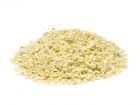
A high energy, very digestible and palatable feed providing a good source of ‘slowly fermentable’ starch.
Recommended daily feed rates (per head basis)
Maize germ can be fed as part of a TMR, within a blend, or top dressed onto other feeds. It
should not be fed alone in a parlour feeding system and should be introduced gradually
into the ration.
•Milking Cows Up to 5 (typically 3)kg mixed with other feeds
•Dry Cows Up to 2 (typically 1) kg
•Replacement Heifers Up to 2 kg and up to 30 % of the DMI
•Calves (to 12 weeks) Up to 1.5 kg and up to 25% of the DMI
•Growing Cattle Up to 3 kg and up to 40 % of the DMI
•Finishing Cattle Up to 5 kg and up to 50 % of the DMI
•Suckler Cows Up to 3 (typically 1)kg
•Ewes and Rams Up to 1 (typically 0.5) kg
•Hoggets and Lambs Up to 0.75 kg/head or up to 40% of the DMI
•DMI = dry matter intake
•Maize Germ is available all year round as bulk tipped loads.
•It should be stored in cool, dry conditions and used within one month of delivery.
•This is a co-product from Maize grain processing, due to the process the meal produced can arrive on farm warmer than ambient temperature, if this occurs, please spread the product on a clean concrete surface until it has cooled down and prior to storing in a bunker.
•Secondary heating can occur whilst being stored, please inspect, and check on a regular basis for areas of heat, if this
occurs, please manage the meal in the same way as on delivery.
Maize Germ is produced by combining the fibrous bran and oily germ which are separated from the
endosperm of the maize during the process of dry milling. The endosperm is then further processed to
produce corn-flakes or corn flour.
Maize Germ is a FEMAS assured (or a recognised equivalent), fully traceable, product and is marketed by KW Alternative Feeds a UFAS-accredited merchant. Maize Germ (Maize germ meal) is listed under number 1.2.12 in the EU Catalogue of Feed Materials.
There is an inherent risk of mycotoxins associated with the feeding of maize based products, this canfluctuate seasonally, based on growing, harvesting and storage conditions and therefore risks are well known and documented. These products are fed as part of ruminant diets on the basis of nutritional advice which must always include the addition of a mycotoxin binder made up of a bentonite clay and a yeast cell such as UltraSorb R, to mitigate these risks. For more information on UltraSorb R and its feed rate please see the datasheet on our website or contact your KW salesperson.
KWFEEDS
Faba Fibre Pellets are a balanced energy source in starch...
A very palatable, high energy and protein feed, rich in...
High energy from starch and sugar, Breakfast Cereal (No. 1...
A high protein and energy molasses-based liquid containing regulated release...